
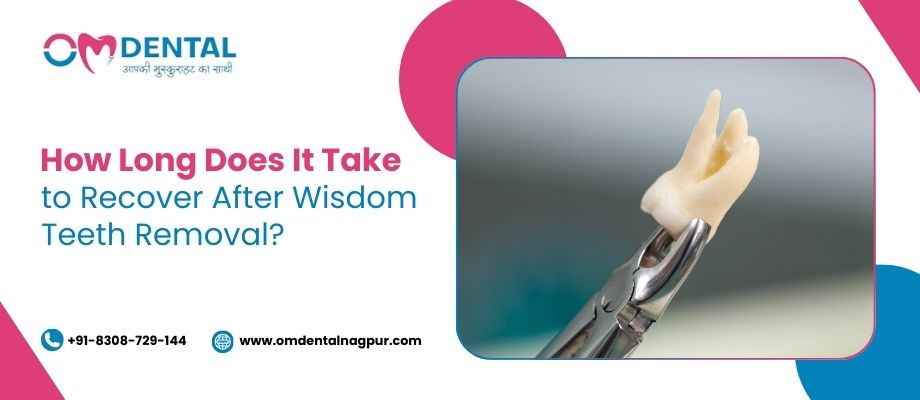
The tooth is out.
The anesthesia has worn off.
And now the question every patient asks:
“Is this normal?”
Recovery after wisdom teeth removal isn’t painful because something is wrong; it’s uncomfortable because your body is healing. At Om Dental Clinic, patients coming in for wisdom tooth removal in Trimurti Nagar often say the same thing:
“Doctor, procedure se zyada recovery ka darr lag raha hai.”
That’s completely natural.
Instead of giving vague timelines, this guide walks you through recovery day by day, exactly the way patients experience it after wisdom tooth extraction.
The First 24 Hours (Day 0): Rest Comes First
This is the most important phase of recovery.
What you may notice
- Numbness is slowly wearing off
- Mild to moderate pain
- Slight bleeding
- Swelling beginning near the jaw
All of this is expected after wisdom tooth removal.
The key focus during the first 24 hours is protecting the blood clot, which helps the socket heal properly.
What helps healing
- Bite gently on the gauze as advised
- Rest with your head elevated
- Take prescribed medicines on time
- Use ice packs externally for swelling
What to strictly avoid
- Rinsing forcefully
- Hot food or drinks
- Smoking or alcohol
- Using a straw
At Om Dental Clinic, we explain these steps clearly to patients undergoing wisdom tooth extraction in Swawlambi Nagar because early mistakes can slow healing.
Day 2–3: Swelling Peaks, Questions Increase
This is the phase when most doubts arise.
What’s normal during this period
- Swelling may increase slightly
- Jaw stiffness
- Discomfort while chewing
- Mild pain while opening the mouth
Many patients feel worried when swelling increases on day 2, but medically, this is often when inflammation peaks before it starts settling.
A common concern we hear
“Pain pehle se zyada lag raha hai, is this okay?”
In most cases, yes. As long as pain is controlled with medication and swelling doesn’t worsen rapidly, healing is progressing normally.
Gentle oral hygiene and soft foods are important during this stage.
Day 4–7: Visible Improvement
By this time, most patients start feeling better.
Signs of healing
- Swelling begins to reduce
- Pain becomes dull, not sharp
- Jaw movement improves
- Eating feels more comfortable
You may gradually reintroduce semi-solid foods, but very hard or crunchy items should still be avoided.
Patients who undergo wisdom tooth removal in Trimurti Nagar at Om Dental Clinic often tell us that this is when they finally feel reassured that recovery is on track.
Week 2: Almost Back to Normal
By the second week:
- Pain is minimal or gone
- Swelling has resolved
- Chewing feels normal
- Mouth opening improves significantly
If stitches were placed, they may dissolve naturally or be removed during a follow-up visit.
This is also when dentists assess how well the gums and socket are healing internally.
One Month: Complete Healing for Most Patients
Even though you may feel normal earlier, bone healing takes more time than gum healing.
By one month:
- The extraction site is well healed
- Normal eating resumes
- Brushing feels comfortable
For impacted wisdom teeth, healing may take slightly longer, which is completely normal.
Is This Normal or Should You Call the Dentist?
This clarity helps patients avoid unnecessary stress.
Normal after wisdom tooth extraction
✔ mild pain
✔ gradual swelling reduction
✔ slight jaw stiffness
✔ sensitivity near the site
Contact your dentist if you notice
- increasing pain after day 3
- foul smell or taste
- Fever
- swelling that worsens instead of improving
At Om Dental Clinic, patients undergoing wisdom tooth extraction in Swawlambi Nagar are encouraged to call if something doesn’t feel right. Early reassurance often prevents complications.
Recovery Time Varies From Person to Person
Healing depends on:
1. Impaction of the Tooth: The presence of an impacted tooth can significantly complicate the extraction process. An impacted tooth is one that is unable to emerge properly through the gums, often due to a lack of space or alignment issues, leading to potential infections or damage to neighboring teeth.
2. Age of the Patient: The age of the individual plays a crucial role in the healing process. Younger patients generally experience quicker recovery times and may heal more efficiently compared to older adults, whose bodies may respond differently to trauma and surgical procedures.
3. Oral Hygiene Practices: A patient’s oral hygiene habits before and after the extraction are vital for optimal recovery. Good oral hygiene helps minimize the risk of infection and promotes faster healing, while neglecting dental care can lead to complications such as dry socket or inflammation.
4. Smoking Habits: Smoking can adversely affect dental health and post-extraction recovery. The chemicals in tobacco products can impede blood flow and healing, increasing the likelihood of complications and prolonging recovery times.
5. Adherence to Aftercare Instructions: Following post-extraction care instructions is essential for a smooth recovery. Patients who diligently adhere to guidelines regarding pain management, dietary restrictions, and activity limitations tend to experience better outcomes and fewer complications.
This is why recovery timelines are always personalized rather than generalized.
A Reassuring Note From Om Dental Clinic
Wisdom teeth removal sounds intimidating, but with proper guidance, recovery is usually smooth and predictable.
Healing doesn’t mean zero discomfort; it means steady improvement. And you don’t have to second-guess every symptom alone.
At Om Dental Clinic, we focus on clear instructions, honest answers, and follow-up care for patients choosing wisdom tooth removal in Trimurti Nagar and nearby areas.
Frequently Asked Questions
1. Is it painful to remove a wisdom tooth?
No, the procedure itself is not painful. Before removing the tooth, the area is completely numbed with anesthesia, so you won’t feel pain, only a little pressure. After the numbness wears off, some discomfort is normal. This is managed easily with medicines prescribed by your dentist.
2. What is the recovery time for wisdom teeth removal?
Most people feel much better in 3 to 5 days. Swelling and pain usually reduce within a week. Complete healing inside the gums takes a few weeks, but you can return to normal activities much earlier if you follow after-care instructions.
3. What happens if a wisdom tooth is removed?
Once the tooth is removed:
- The gums start healing naturally
- pain and swelling reduce gradually
- The jaw area becomes comfortable again
The empty space fills in with healing tissue over time. Nothing harmful happens; in fact, removing a problematic wisdom tooth often prevents future pain and infection.
4. Will my face change after wisdom teeth removal?
No, your face will not change permanently. There may be temporary swelling for a few days, which can make your face look puffy. Once the swelling goes down, your face looks the same as before. Wisdom tooth removal does not change your jaw shape or facial structure.
5. Why is day 3 the worst after a tooth extraction?
Day 2 or 3 is often the most uncomfortable because:
- Swelling reaches its peak
- Inflammation is highest during healing
This is actually a normal part of recovery, not a sign of a problem. After day 3, pain and swelling usually begin to improve. If pain suddenly increases rather than decreases, you should contact your dentist.