

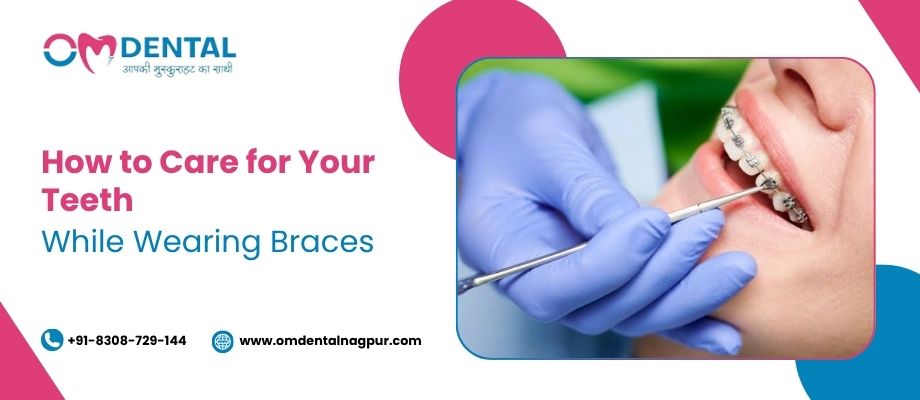
The first few days of braces are strangely memorable.
Not because of pain.
Because suddenly, eating a simple samosa feels like a challenge.
Your tongue keeps checking the brackets every few minutes. You smile differently in mirrors. And somewhere during lunch, someone quietly says:
“Arre… kuch phas gaya hai.”
That is usually the unofficial beginning of a braces journey.
At Om Dental Clinic, we often notice that patients prepare mentally for straighter teeth, but no one prepares them for how much their daily routine will change first. Before braces transform your smile, they transform habits. Brushing takes longer. Eating becomes more careful. Even drinking cold water feels different for a few days.
Most problems you might face during braces treatment are not because of the braces themselves. They happen because people don’t fully understand how to care for their teeth while everything inside the mouth is shifting.
The First Thing Braces Change Is Your Routine
People imagine teeth straightening treatment as a cosmetic process. But once braces are placed, they immediately become part of your daily life.
Earlier, brushing your teeth took two minutes. Now you stand in front of the mirror checking wires, corners, and brackets. Earlier, you finished meals quickly. Now you think twice before biting into hard foods.
At Om Dental Clinic, people are surprised by how aware they become of their teeth during the first few weeks of braces treatment. That awareness is actually important. Good dental braces care directly affects how smoothly treatment progresses.
The reality is simple: braces create small spaces where food and plaque can hide easily. If oral hygiene becomes careless, problems begin quietly, such as swollen gums, stains, bad breath, or even cavities around the brackets.
That is why consistent teeth alignment treatment requires discipline outside the clinic, too.
Why Oral Hygiene Matters More During Braces?
Braces make cleaning more complicated because wires and brackets create extra surfaces inside the mouth. Food particles stick more easily, especially around the gum line.
People dealing with misaligned teeth already struggle with difficult-to-clean areas before braces begin. Once braces are added, oral hygiene becomes even more important.
At Om Dental Clinic, we explain you that poor dental braces care can slow down smile correction treatment significantly. Plaque buildup around brackets may lead to gum irritation, enamel marks, and inflammation, which can interrupt progress.
A successful smile alignment procedure depends not only on the dentist adjusting the braces, but also on how carefully the patient maintains hygiene at home.
The “Food Stuck in Braces” Problem Everyone Experiences
There is one phase every braces patient goes through.
The “food stuck in braces” phase.
And Indian food makes this experience even more memorable.
Poha hides behind wires. Paneer fibers get trapped near brackets. Popcorn kernels somehow appear hours later.
This becomes risky during teeth straightening treatment because plaque buildup can create white spots on the enamel around the brackets, permanent marks that remain visible even after braces are removed.
Simple habits help reduce this problem:
- Rinsing after meals
- Carrying an interdental brush
- Avoiding sticky foods
- Checking teeth after eating
These small routines protect your progress in braces treatment while keeping your mouth healthier throughout the process.
Brushing with Braces Is a Different Skill
You may assume that regular brushing is enough during orthodontic braces treatment. Unfortunately, braces require a completely different cleaning technique.
Brushing now needs angles.
Instead of brushing only the front surfaces of the teeth, the brush must carefully clean above the brackets, below them, and around the wires. Rushed brushing leaves plaque trapped in areas that patients cannot easily notice.
At Om Dental Clinic, we recommend brushing after every major meal during braces treatment whenever possible. Soft-bristled toothbrushes and orthodontic brushes help clean more effectively without damaging brackets.
Good brushing habits support better teeth alignment because healthier gums allow smoother tooth movement. Patients who neglect cleaning often develop swollen gums, making adjustments uncomfortable.
This is one reason why smile correction treatment works faster for patients who maintain excellent oral hygiene.
Foods That Help Braces, And Foods That Fight Them
Soft foods reduce discomfort after tightening appointments. Yogurt, rice, dal, smoothies, soft fruits, and soups are easier during sensitive phases.
Hard foods create the opposite effect.
Crunchy snacks, sticky sweets, hard candies, popcorn, and ice can break brackets or bend wires. Even one broken bracket may delay orthodontic braces treatment by weeks because tooth movement loses direction temporarily.
At Om Dental Clinic, we explain that braces work like a carefully controlled system. Every wire adjustment is planned precisely. Damage interrupts that process.
Don't underestimate sugary drink intake during smile correction treatment. Frequent soft drinks increase acid exposure around brackets, raising the risk of enamel damage.
Good food choices protect both treatment progress and long-term dental aesthetics.
The Hidden Problem: White Marks After Braces
Many people expect perfectly straight teeth after braces treatment.
What can surprise you is seeing faint white marks around the areas where brackets once sat.
These are called decalcification spots, early enamel damage caused by plaque that remains around braces for extended periods.
This is why proper dental braces care matters so much.
At Om Dental Clinic, we remind patients that braces do not automatically guarantee a healthy smile. Oral hygiene still determines the quality of the final result.
A person may complete teeth alignment successfully, but still struggle with staining or enamel damage if hygiene was ignored throughout treatment.
The best smile transformation happens when straightening and oral care progress together.
Braces Don’t Just Straighten Teeth. They Correct Function.
One of the biggest misconceptions about braces treatment is that it is only cosmetic.
In reality, many patients begin treatment because misaligned teeth affect chewing, bite pressure, speech clarity, or jaw comfort.
Bite correction treatment improves how upper and lower teeth meet during eating and speaking. Uneven pressure caused by poor tooth alignment can strain certain teeth excessively over time.
At Om Dental Clinic, people with severe teeth spacing issues often report that food constantly gets trapped before treatment begins. Others mention difficulty in properly cleaning crowded areas.
These are the benefits of braces treatment, which not only improve oral function but also smile aesthetics.
And when bite balance improves, patients often notice something unexpected: chewing feels easier, jaw tension reduces, and smiling becomes more natural.
Caring for Braces During Different Stages
The first few weeks of braces treatment usually involve soreness and sensitivity. Patients eat softer foods as they adjust to brackets and wires.
The middle stage demands consistency. This is where many people become careless because the excitement of starting treatment fades. But maintaining strong dental braces care during this phase is critical for stable progress.
The final stage often focuses on refinement, closing small gaps, improving bite balance, and preparing for retainers.
After the teeth gap correction and smile alignment procedure are completed, retainers become essential. Without retainers, teeth slowly try to shift back toward their old positions.
At Om Dental Clinic, we explain that retainers protect the results patients worked months to achieve.
Confidence Changes Before the Smile Does
There is an awkward phase that nobody talks about enough. The phase where patients suddenly become very aware of their smile before it actually improves.
Teenagers usually adapt quickly. Adults often become more self-conscious. At meetings, photographs, weddings, and presentations, people notice their braces constantly in the beginning.
But something interesting happens during teeth straightening treatment.
Patients slowly stop hiding their smiles.
Because the discomfort now feels temporary. Progress becomes visible. Crowded teeth begin to align. Small improvements appear every month.
And that emotional shift matters.
A confidence-boosting smile does not suddenly appear on the day braces come off. It gradually builds during the journey itself.
A Straighter Smile Needs Daily Discipline
Braces treatment is not difficult because of pain. It is difficult because it demands consistency.
The real success of smile correction treatment happens in ordinary daily habits:
- Brushing carefully
- Cleaning after meals
- Avoiding damaging foods
- Wearing retainers properly
- Attending adjustment appointments regularly
At Om Dental Clinic, we believe patients deserve realistic guidance, not just perfect before-and-after photographs. Because behind every successful smile transformation is months of discipline that patients rarely talk about.
Modern teeth alignment treatment also does
- Crooked teeth correction
- Teeth gap correction
- Improve bite function
But the quality of the final result depends heavily on how well the teeth are cared for during the journey.
A properly maintained braces journey creates more than straighter teeth. It creates healthier gums, stronger oral habits, improved dental aesthetics, and a natural confidence people carry long after the brackets disappear. Book your appointment with us today!
FAQs
What is the best age for braces?
The best age for braces is usually between 10 and 14 years, but adults can also get braces successfully. This is one of the benefits of the braces treatment.
Can I eat noodles with braces?
Yes, soft noodles are generally safe to eat with braces as long as they are not too sticky or hard.
Can braces last 3 months?
Most braces treatments take longer than 3 months, but minor alignment issues may improve faster with specific orthodontic treatments
Are teeth 100% straight after braces?
Braces can significantly improve alignment, but maintaining results also depends on wearing retainers properly after treatment.
Who should avoid braces?
People with severe gum disease, poor oral hygiene, or untreated dental problems may need treatment before starting braces.